


What makes a school successful?


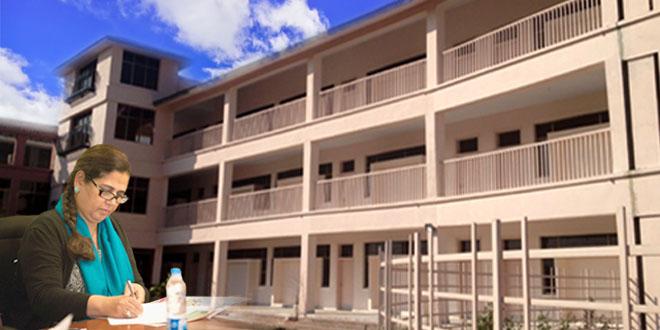
Developyst: What makes a school successful?
Naznin: Leadership is the first and foremost ingredient for any venture to be successful. In case of a school, the teacher is the leader. The campus, the infrastructure etc. may contribute, but the soul of a good school lies in its teachers, and it’s the teachers that make the school successful.
Developyst: What makes a good teacher?
Naznin: A good teacher’s foremost quality is to be patient with his (her) students. He doesn’t come with any preconceived notions of what children should be like, but treats each child on his/her own terms. A good child is a treat to teach in any case; a successful teacher knows how to turn around the difficult child. Life is becoming more and more complex: the family size has shrunk, separations are common, and often-single working parents are seen raising children. These societal factors contribute towards the behavior of the children, and a good teacher understands how to create an environment for students where their energies focus on the positive things in life. The foremost element is to gain the children’s trust. If the children trust their teacher and know that the teacher is sincere, and will not belittle them or make fun of them, it will automatically create a learning conducive classroom.
Developyst: It seems that the skills of a good teacher can’t be gauged through a resume, they are more along the lines of personality traits and values; How does an institution like Headstart nourish and sustain such skills in all of its teachers? There must be a way in which you assess whether teachers possess these values, traits, or do you build them over time?
Naznin: I understand that these are abstract values that are not tangible. There is no tangible way of saying ‘I have made a rule, therefore all teachers will be honest; you simply can’t do that’. These values have to be practiced over time till they inherently become part of the teacher’s personality. Just like mathematics has to be learnt through practice these values have to be rehearsed till they become a habit. These values have to become a norm and that has to come through leadership. For instance, if you are asking your teachers not to make the school a political place, the foremost, you must never backbite or talk bad about another teacher or staff member. At Headstart we don’t have Islamiat as a subject in junior school, because in my opinion Islamiat is to be practiced every day all the time. It cannot be taught in a classroom. You have to teach the children to be kind, not to lie, smile at other people, not cheat, all through practice.
Developyst: If you are practicing and five people learn these values from you, then five more learn from them and so on, wouldn’t the message get diluted within the system? How do you ensure that these values are inculcated in all the teachers effectively?
Naznin: It is an on-going process so you have to practice these values frequently and then put systems in place to safeguard and harness them. In our school, very few parents know me; a lot of them have never seen me. However, they expect a certain kind of service delivered by the school, and I ensure that they get it. My Vice Principals are extremely capable and embody these values. They are representing this philosophy and provide that attention to detail, which is the right of every parent. It is a repetitive on-going process, which has to continue over time. Perhaps this is the reason Allah brings Ramzan every year to help us strengthen our beliefs and values through collective repetition and re-emphasis on the basic teachings. You have to have norms in place and the system continues to flourish. Keeping in mind however, that no matter how hard you try things will go wrong. When the time comes, you deal with such instances with severity and address them to set an example for everyone. It is better to draw clear lines as to what can be fixed and what is intolerable.
Nadine: To add; It is the kind of things you make time for in the morning. At Headstart all teachers greet children in the morning with their respective names when they walk into the classroom. When teacher do this, children follow. If you are a new teacher, you are always paired with an existing teacher before you start teaching solo.
Developyst: Does this mean that the system is grown within the system; a new teacher wouldn’t be allowed within the system without apprenticeship?
Naznin: This approach is especially practiced in the junior classes. At senior level there are manuals: ‘dos and don’ts for the teachers’. These rules are stringent and whatever applies for the students, also applies for the teachers. If I don’t want children to use their mobile phones in the classroom, I should certainly not be doing so. That’s abuse of power. Neither should I be late, nor not have my materials ready, if I expect the children to be on time and finish their homework.
Developyst: So on a daily basis how as an admin will you be tracking if someone’s on time or not? With a staff of 290, how do you manage?
Nadine: All teachers sign in at the front desk. Everyone is responsible for clocking in and clocking out. At A’levels they have a card swiping system that marks attendance class wise. Technology is extremely helpful in taking care of such challenges. Also the teachers themselves track these things as well.
Naznin: Also, keep in mind that no ‘one’ person is looking after 100 teachers and staff members. There are supervisors for every 25-30 teachers and they monitor them. They way I measure things is simple ‘I am the most loyal or most dedicated person to Headstart, If I can’t do it, nobody can. I can’t look after 100 teachers, hence no one can.’ You have to make the work doable, divide it so it’s reasonable for the managers.
Developyst: Are these supervisors teachers themselves? Are they product of the system or are they inducted just as supervisors?
Naznin: Yes, they are academic coordinators. They are from within the system and it is a must for them to be teachers.
Developyst: Do the board results feed into a learning outcome data for the school? On a larger scale, do you use the data for defining school policy? If yes how?
Naznin: O’ Level examinations can sometimes have surprising results. Obviously the results are valuable and the society seems to put a lot of emphasis on it. But they measure performance on just one day’s work. Sometimes our best students have surprising results. Also another thing that is bothersome is that you can get an A* in ‘alternative to practical’ exam and have no idea what a pipette looks like when you reach A’ levels. But apart from these challenges, we do work with the results and incorporate the learning in our system.
Developyst: From Grades 1-5, how do you track student performance? We understand that there is a very strong relation between the teacher and student at that age, however is there an institutional method for tracking learning outcomes at different grades?
Naznin: We have designed a ‘class expectancy’ for every subject. This is a product of accumulated learning over time and it measures an average level of expected learning within that grade. For instance, for English, it might measure if the students can use pronouns; understand relation between a clause and sub-clause etc.
Nadine: For writing we have specially designed rubrics to assess them. Instead of giving a very lengthy feedback on essay that scares students. We have rubrics that they don’t even need to see. Teachers maintain this information to plan better and parents see on a grid – graphically where the child is, if they please. Teachers do this multiple times a year for every subject. So over the years you can see how the progress of every child is changing.
Developyst: Is this data used somewhere? Can a child or his parents witness the progress over years? Or is the data lost over time?
Naznin: Yes it is maintained from grade 1 till A’ levels. So in fact when a child goes to A’ Levels he has all his reports of progress etc. This record can also be shared with the colleges he/she applies to make a better case for his/her progress over time.
Developyst: Let’s explore some other factors that contribute towards a good learning space, In your school do the teachers move around in different classes or do the students shift classes during the day?
Naznin: From ages 2-4, the average student teacher ratio is 10:1. In latter years the ratio slightly increases. For early ages you have one class teacher who stays in the class with them; however they do shift to library, art room, sports and music room etc. during the week. Subject teachers teach all section of the same grade.
Nadine: We have had a lot of discussions about this and we make sure that the same teacher teaches one subject to all sections. This is to avoid comparisons between the sections. We don’t want students or parents to compare subject teachers and assume one to be better than the other.
Developyst: So you nip the problem right there that is superb! Such things make a huge difference. Given your accumulated learning over time what do you suggest is the best classroom size for grade 1-5 students? Did you find a specific furniture arrangement to be more conducive to learning?
Naznin: I have taught for many years and at almost all levels, and I think 25 is the maximum number of students that should be in a class room. The classroom size should not be less than 25’ by 20’. The furniture arrangement should be flexible however. The best way is the conventional arrangement of chairs in a row; however, at times it is conducive to make children sit in an island sort of arrangement. Therefore seating should be flexible, and the furniture should be light, so children can move it around themselves.
Nadine: I am a big advocate of deconstructive classrooms. In my opinion roundtable like arrangements in a classroom are more conductive to learning. The way you arrange your furniture say a lot about the classroom; it’s called the hidden curriculum. It signifies your values around equality, your views on the structure of the society and just creates an open and transparent environment with the students, which builds trust.
Naznin: Nadine is very capable and radical teacher. She knows what she is doing and how she is going to be doing it within the classroom. Her lesson is extremely well planned before going into any classroom and that is what we expect from all teachers. Only when you have a good plan, can you pull of novel things within a classroom. At Headstart we encourage innovation within classrooms and we also provide tools to experiment. However, we expect our teachers to plan things and execute them perfectly to maximize student learning.
Developyst: This is extremely exciting, and we strongly believe that the learning from this discussion can be used for the larger benefit of Pakistan’s education sector. Thanks a lot for your time and we hope to continue this dialogue in future as well.